

Butterflies, Bowie and 400 Brilliant Minds.
By Sophia Gruner
Have you ever stood at the edge of something exciting and thought, “Wow… this moment really matters”?
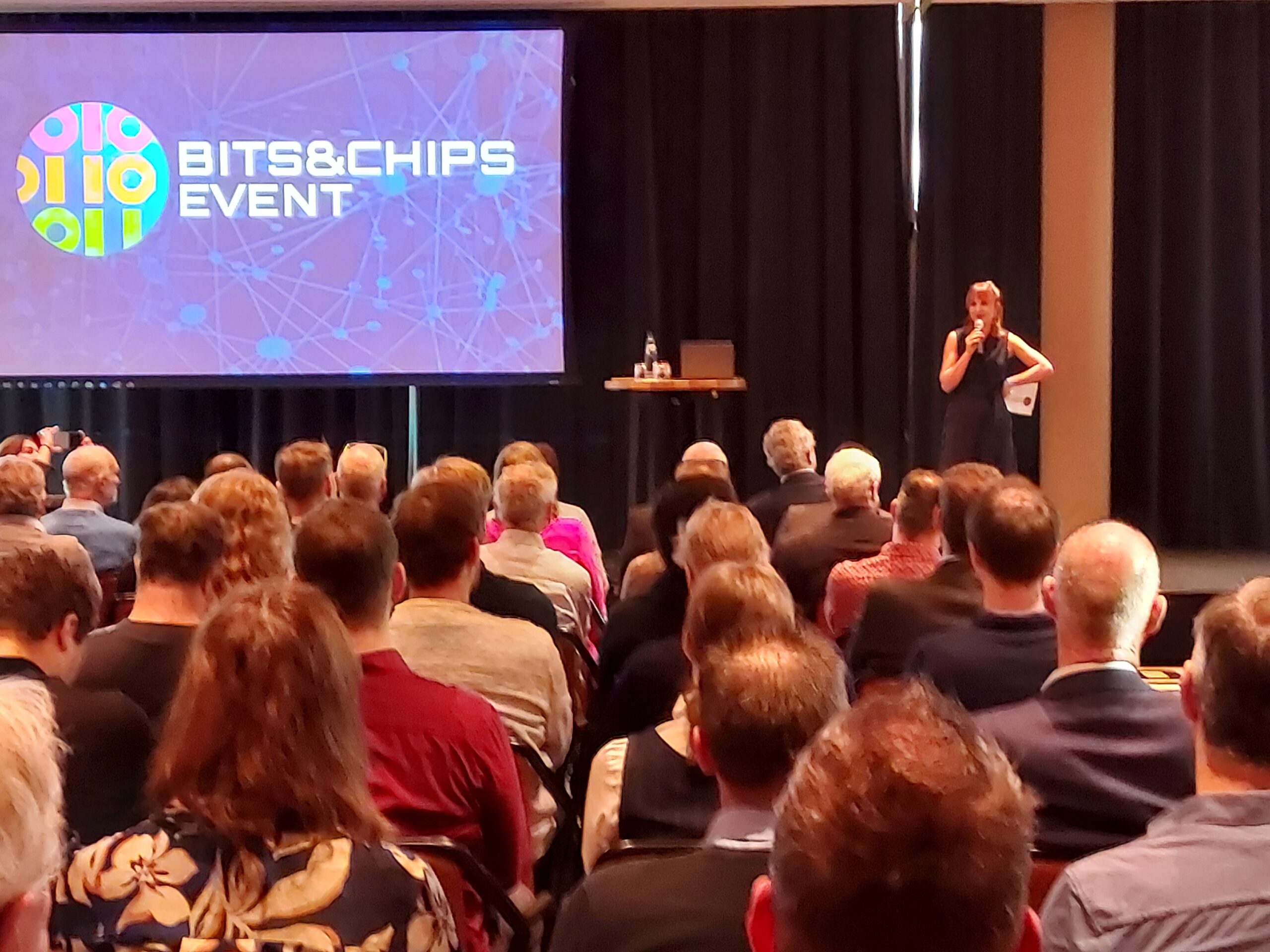
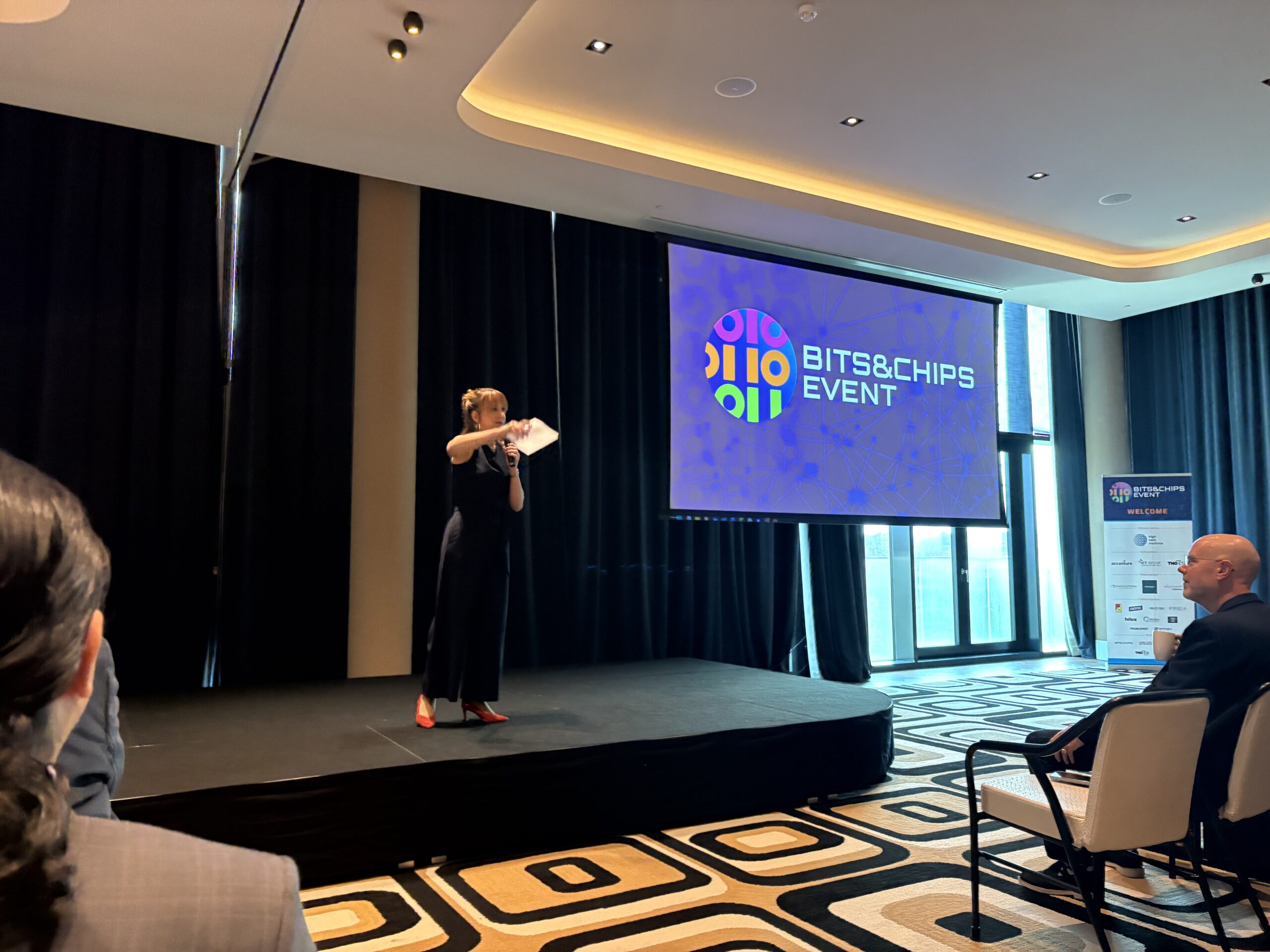
That’s exactly how I felt preparing to moderate the Bits & Chips conference.
When Nieke Roos from NL- based Techwatch asked me to chair the day, I was instantly filled with energy. I said yes on the spot, and immediately my mind shifted into creation mode.
I genuinely love preparing moderations, and I knew this would be a chance to set the tone for an audience of people who turn ideas into code, circuits, algorithms and innovation.
That made me raise the bar high – welcome to the butterfly mix of adrenaline and endorphins.
I wanted to craft an opening that didn’t just welcome them but nudged them into a visionary mindset from the very first minute.
So I asked myself an ancient question Aristotle would have been proud of:
How do I shape this introduction through ethos, pathos, and logos to spark the energy I want in the room?
Read on to see how my friends Bowie, Ada Lovelace and the Simpsons helped me out, and how the skill of moderation helps you in your daily work.
The first minute: The art (and adrenaline) of opening a room
The opening. That first minute when you walk on stage, take a breath, and every eye in the room quietly measures you up. It’s the moment that can make or break the connection with the audience, leading them either into the “lean in lad” or the “zoom out space”.
Of course, it’s not quite that black and white, but it feels that way. Within seconds, the audience will decide whether they trust you, whether you understand their world, and whether this is going to be time well spent or something they’ll half-listen to while mentally planning their next coffee.
That first minute is the test of ethos, pathos, and logos… not in a textbook sense, but in a very human, heartbeat-on-stage kind of way.
Ethos: Show them you understand their world
For me, ethos isn’t about credentials. It’s about resonance. The audience needs to feel, almost immediately, that you get them, that you’ve stepped into their space with respect, curiosity, and relevance.
When I moderated the Bits&Chips conference, I knew exactly who would be sitting in front of me: system architects, engineers, technical innovators. Brilliant people, precise thinkers, often skeptical listeners. They can smell superficiality from a mile away.
So. I knew I couldn’t just open with empty enthusiasm. I had to earn their attention and respect.
I opened with David Bowie, because Bowie is one of those rare figures who connect generations and backgrounds. He was imaginative, futuristic, a little weird in the best possible way. And that magnetic blend speaks to engineers far more than any “good morning” ever could.
From there, I moved to thinkers who shaped centuries: Da Vinci, Jules Verne, Ada Lovelace. People who were once mocked, underestimated, even called fools, and who later became the symbols of visionary thinking.
And that was my punchline to the audience:
“All the knowledge for what we will call ‘visionary’ tomorrow is already in this room.”
To add a layer of humor (the gentle kind that engineers actually enjoy), I brought in The Simpsons – arguably the most accurate “prediction machine” in global pop culture. Nobel Prize winners, Super Bowl champions, even presidents: they predicted 34 big events correctly. It’s fun, it’s surprising, and it loosens up a very analytical crowd.
And then, crucially, I handed the moment to them: a simple show of hands.
Raise your hand if you relate to this.
Raise your other hand if you relate to that.
People want to be involved. They want to feel the event needs them. That’s ethos: not me proving myself, but me proving that I see them.
Pathos: Make them feel something – without faking it
Pathos is about energy, and I don’t mean fake enthusiasm or motivational sparkle. It’s about presence. About walking out with genuine warmth, curiosity, and confidence that people can feel.
There’s fascinating research around mirror neurons: when you express authentic emotion, the audience’s brain literally mirrors it. That’s why body language matters more than perfect words.
The power of visualization
Before stepping on stage, I visualize the feeling I want to bring: grounded, open, positive, but calm.
But here’s the hard part: you can’t please everyone. If you’re too bubbly, people might not take you seriously. Too serious, and the energy dies. Too clever, and it comes across as cold. Too casual, and you lose authority.
That´s why I aimed for something in between: human, professional, and slightly unpredictable.
Music helps, especially music that opens emotional memory. Also, a simple show of hands is often enough to wake up a room and say:
“This event is not about watching. It’s about participating.”
Pathos is that invisible moment when the room leans in… and you can feel it.
Logos: Give them structure and a reason to trust your voice
And then there’s logos, the logic, the structure, the reassurance, that you’re not just winging it.
Logos isn’t just facts or figures. It’s the architecture of the story, the clear structure that carries the audience like a song and makes them trust the path you’re taking them on.
In this opening, logos was everywhere, quietly supporting the flow:
- Bowie → imagination, futurism, reinvention
- Da Vinci / Verne / Lovelace → historical continuity of genius
- The Simpsons’ predictions → surprising evidence, playful data
- Audience interaction → co-creating meaning, not consuming it
- Compliment to the room → logical pivot from history → present, setting the tone for the event “know today but dream tomorrow”, “everything we need for tomorrow is already in the room”
This sequence created structure without stiffness.
Logic without lecture.
A clear through-line without heaviness.
That’s logos: the audience may not notice it consciously, but they feel that the flow makes sense. And when something makes sense, they can relax into it.
Why the opening matters so much
The opening is not about being perfect. It’s about setting the energy, connecting to them and create the feeling of “my time is worthwhile of being here,” about earning their respect and trust.
That’s why, even after all these years, I still feel tension about it. Because that first minute matters. It’s the emotional handshake, the moment where you orchestrate curiosity and connection. And people feel it.
Nieke Roos said afterwards: “We had the great pleasure of having Sophia as a moderator at our Bits&Chips Event. She was an absolute professional in hosting our keynotes and one of our breakout sessions. She came very well prepared, and she navigated even our most technically complex speakers with ease, ensuring they were in very capable hands. Her openings and closings were highly original and a lot of fun (…).”
How this matters beyond Bits&Chips
What I realized again on that stage is that moderation isn’t a special skill you only need at conferences. It’s the same craft you use any time you speak to a group, whether that’s your team, your customers, or a room full of decision-makers.
Ethos
- In a team meeting, it’s acknowledging the real pressure people are under before diving into tasks.
- In a customer conversation, it’s opening with an insight or reference that proves you understand their world.
Pathos
- In a workshop, it’s using a warm tone or a small moment of humor to make the room feel safe enough to participate.
- In a presentation, it’s asking a simple, human question that shifts the energy and draws people in.
Logos
- In a project update, it’s offering a clear three-step structure so people instantly see the logic.
- In a pitch, it’s guiding your audience through a clean storyline so they know exactly where you’re taking them.
In every setting, the same principles travel with you: how you connect, how you make people feel, and how clearly you lead them forward.
At Bits&Chips, that was my song.
A melody of Bowie, Da Vinci, and the Simpsons.
And when the room finally opened up and the energy started flowing, I thought to myself: this is why I love this work.
Contact
Are you interested in Butterflies, Bowie and 400 Brilliant Minds.? Please contact us.