

They tried to kill the rebel; they got a carefully engineered revolution
By Mark Hoogewerf
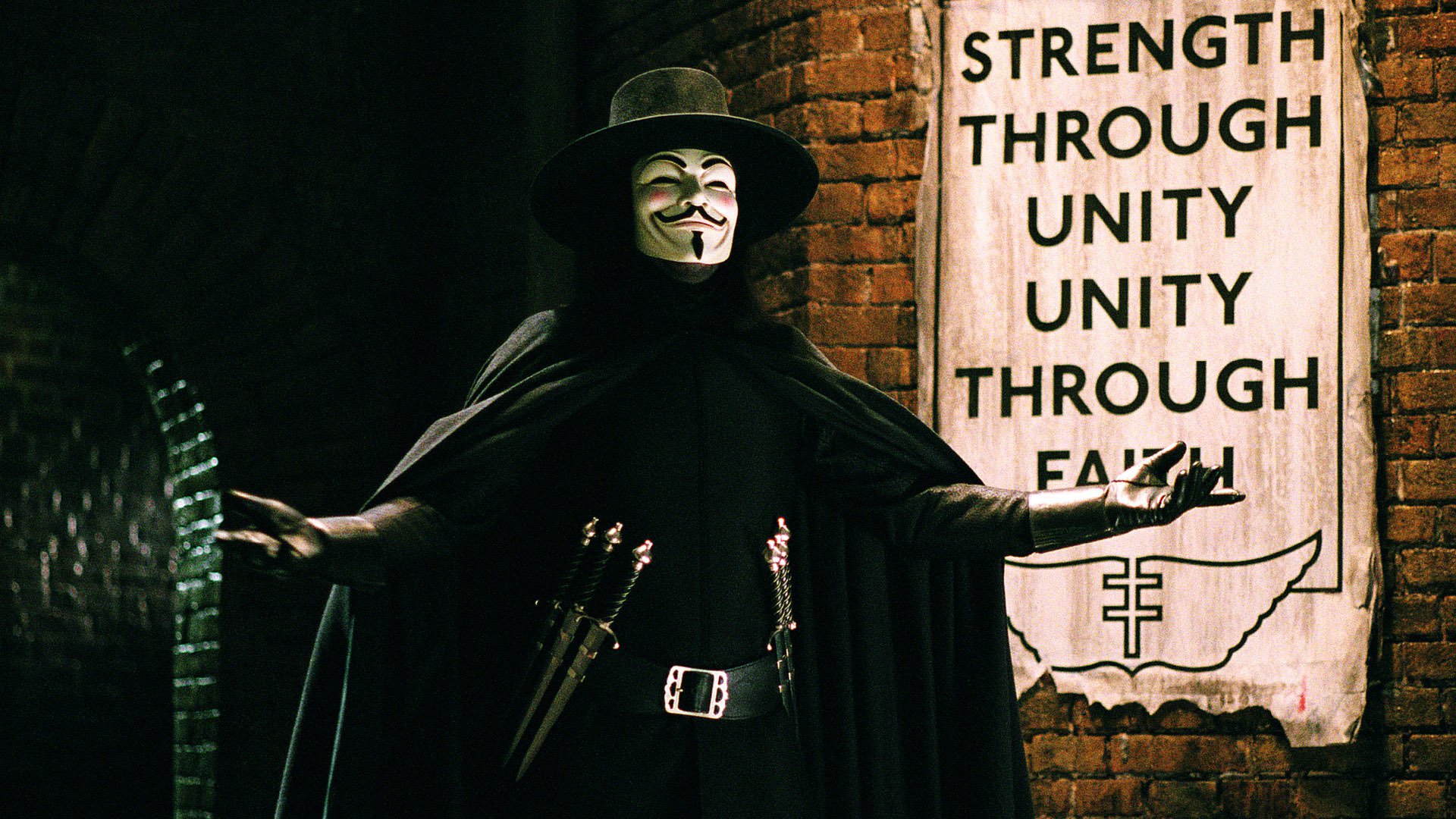
It’s 20 years old, but still as impressive as ever: the movie “V for Vendetta”. Especially in this era of polycrisis and pivoting forces. This story is chock-full of interesting leadership communication lessons. It’s a bit of a long read, but you can deal with that, can’t ya?
Misunderstanding power dynamics
It seems that many leadership failures are not caused by bad strategy, weak execution or lack of intelligence. They are caused by a misunderstanding of power dynamics.
V for Vendetta is often remembered as a dystopian action film. But viewed through the lens of leadership, psychology and systems theory, it is something else entirely: a case study in narrative power.
If you fight the system…
Sociology and organizational science are clear on this point: systems are resilient by design. They survive criticism, resistance and even scandal because they are upheld not just by rules, but by shared beliefs.
Therefore, direct opposition often strengthens what it seeks to destroy. The system frames the rebel as dangerous, irrational or illegitimate – thereby reinforcing its own authority.
“If you fight the system, the system always wins”. But is it true, this common saying? No, as the movie (and many more stories in the real and fictional realm) demonstrates.
Meaning as the real battlefield
In V for Vendetta, the eloquent masked protagonist understands something crucial: people do not obey because they are forced to. They obey because the story they believe makes obedience feel logical, safe or inevitable.
Fear works. Propaganda works. Authority works. Until they stop making sense.
Psychology calls this “narrative coherence”: when the story people hold about the world no longer aligns with their lived experience, tension emerges. That tension demands resolution – sometimes even revolution.
The film’s revolution does not begin with violence. It begins by disrupting meaning. Exposing contradictions. Reframing responsibility. Offering people a new identity, transforming from subjects to citizens.
Once that mind shift occurs, behavior follows naturally. And the system starts to falter.
What science tells us about storytelling and leadership
Neuroscience and behavioral research support this dynamic. Stories activate multiple brain regions simultaneously, increasing retention and emotional engagement.
Identity-based narratives are more persuasive than argument-based communication. Because they touch who you are and who you want to be. And people adopt change faster when they feel part of a shared story rather than the target of a directive.
“People are willing to change, they just don’t want to be changed”, as author/speaker Remco Claassen and organizational expert Peter Senge stated.
In leadership contexts, in your organization, this explains why…
- Culture beats strategy
- Vision outperforms control
- Meaning outlasts authority
Why this matters now
We are living through a structural transition. Trust in institutions is declining. Hierarchies are flattening. Technologies are fueling disruption. Employees, citizens and customers expect coherence, consistency, integrity – not commands.
In this environment, leadership without authentic storytelling is fragile.
Leaders who rely solely on position or policy will struggle.
Leaders who understand narrative – how it is built, spread and embodied – create movement.
From fiction to practice
This is not about manipulation. It is about responsibility. Stories shape decisions, cultures and futures. Leaders with integrity are aware of this and do something good and right with it.
The Noblahblah Storytelling for Leaders masterclass in April is designed for leaders who want to:
- Understand the mechanics behind powerful narratives
- Translate abstract vision into living meaning
- Inspire change without coercion
The lesson of V for Vendetta is not rebellion. It’s about precision based on principles.
The most effective changes – personal, organizational or societal – begin with a story that makes more sense than the preceding story. So, if you want to lead in times like these, that is where your work starts.