

Destiny Duell
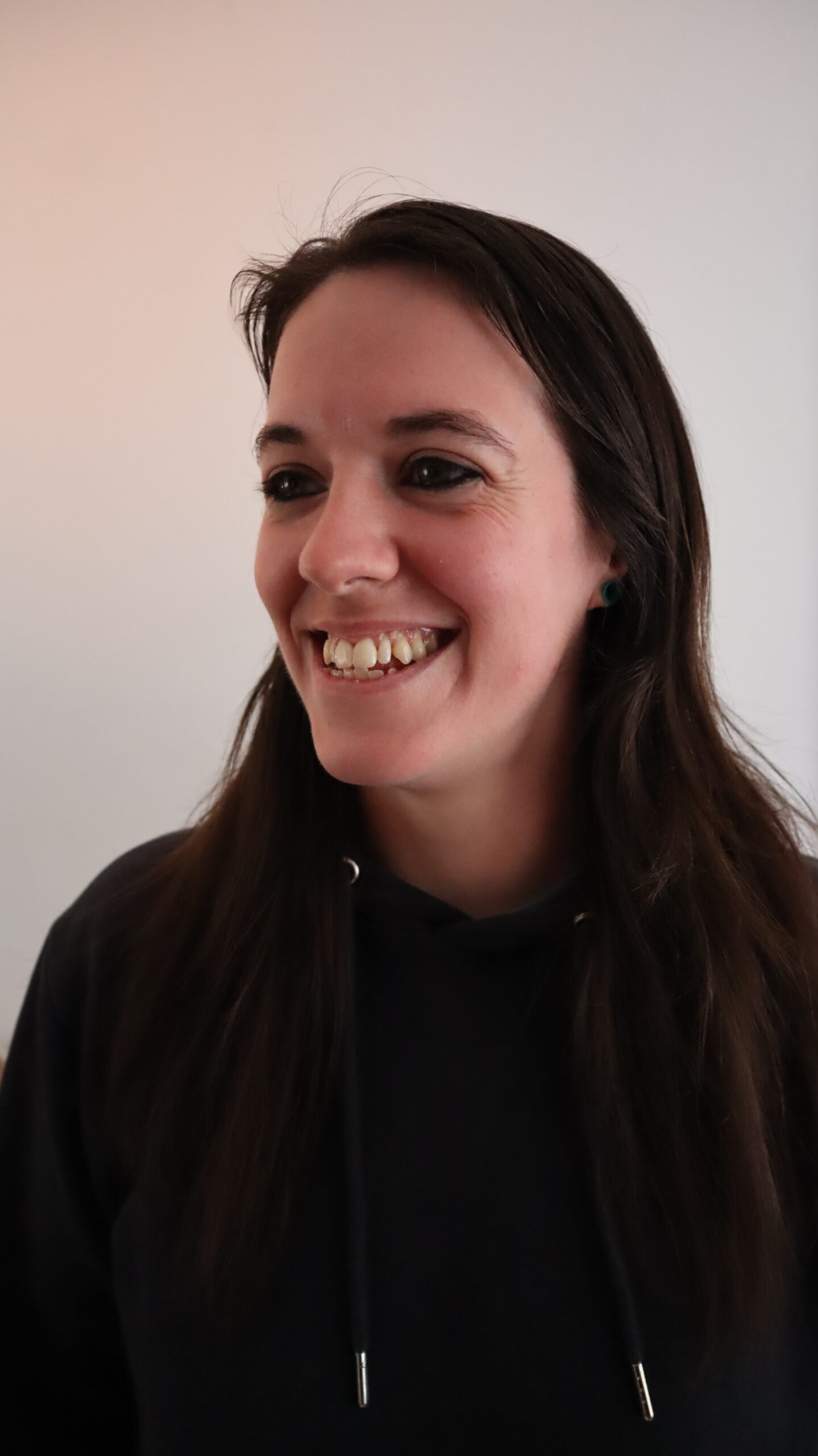
“It’s not just physical work. Every day you prove you belong in a field where almost no one expects a woman to truly belong or succeed.”
Women power at 450 volts
In a world of metal and voltage, Destiny Duell quietly builds a future, an example for other women on how to claim their space in an industrial environment. This is a story about the single mother, the certified journey”man” electrician, the determined woman who rewires her life, one circuit at a time.
Freezing mornings
The alarm rings at 4:45 and, on this January morning, it’s still dark in west Michigan. The thermometer reads minus 10 degrees Fahrenheit, the kind of cold that cuts through layers. If you throw a glass of water in the air, the drops almost freeze before they hit the ground.
Destiny wakes her daughter, Addy, gets her dressed and scrapes ice off the windshield of her 2022 Toyota 4Runner. By 5:15, she’s navigating ice-slick roads toward a daycare that opens early for working parents like her. Then, she drives on to start her day at Challenge Manufacturing.
There, Destiny is one of the few people who can fix what breaks.
Under pressure
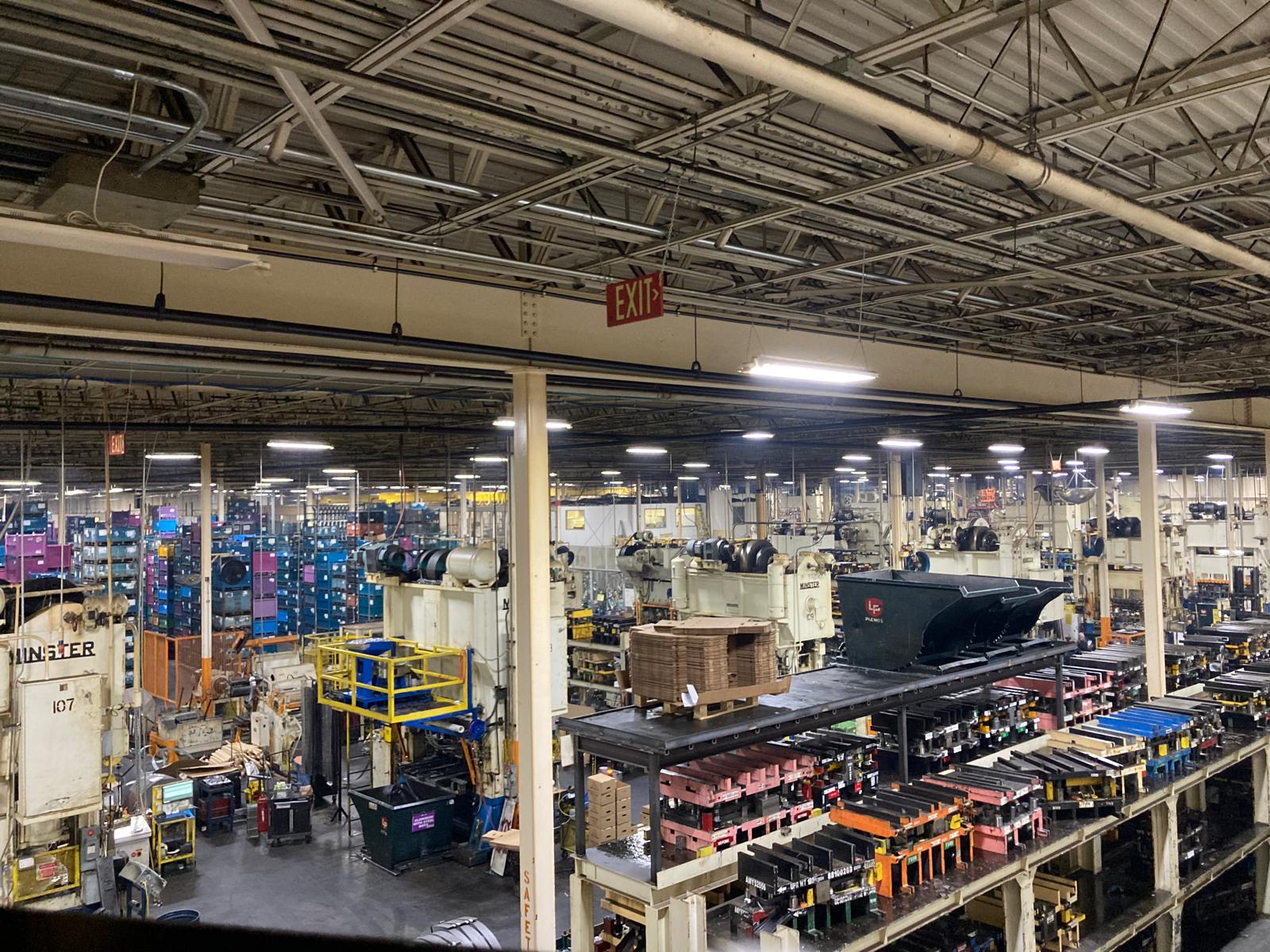
Challenge Manufacturing, just outside Grand Rapids, is one of the largest employee-owned automotive suppliers in North America, producing stamped and welded metal parts for nearly every major carmaker.
It’s a vast factory complex employing more than 1000 people. It’s where heavy metal is pressed and shaped into components that will end up in American cars.
Inside, the plant stretches like football fields joined end to end. The roar of stamping presses fills the space, fluorescent lights running far overhead. The air vibrates with machinery, steel slammed into shape, hydraulics hissing. Workers move in rhythm with the machines. Welding sparks fly.
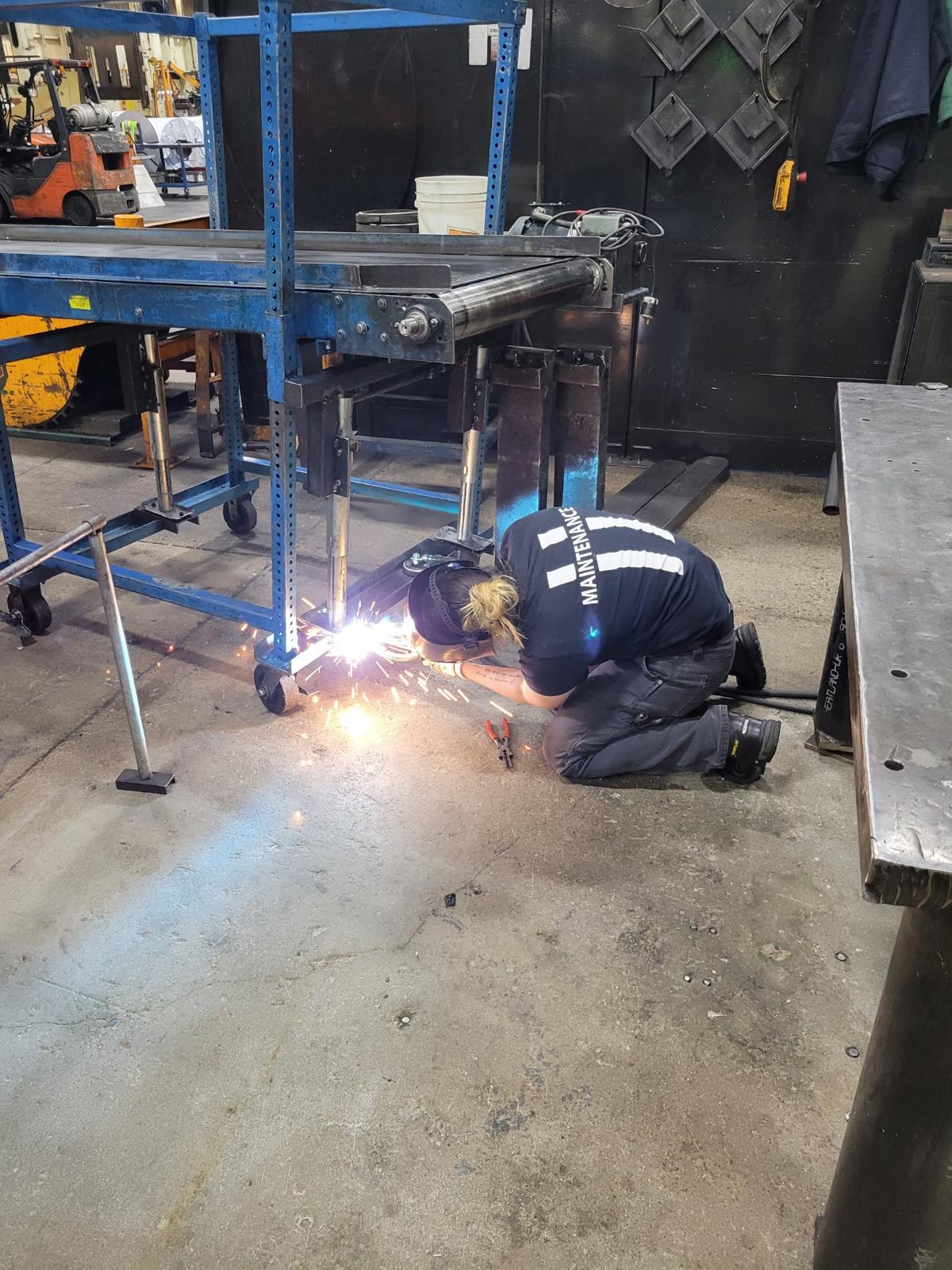
Destiny’s shift starts at 6:00 a.m. with a walk along the factory floor, scanning the day’s breakdown list. A line is down. A sensor is failing. A feeder jammed.
Destiny is a certified journeyman electrician, one of few women to be a certified journey “man”. Her work ranges from fine-tuning control circuits to rewiring machines the size of small buildings. Production depends on her ability to fix things fast.
Working with giants
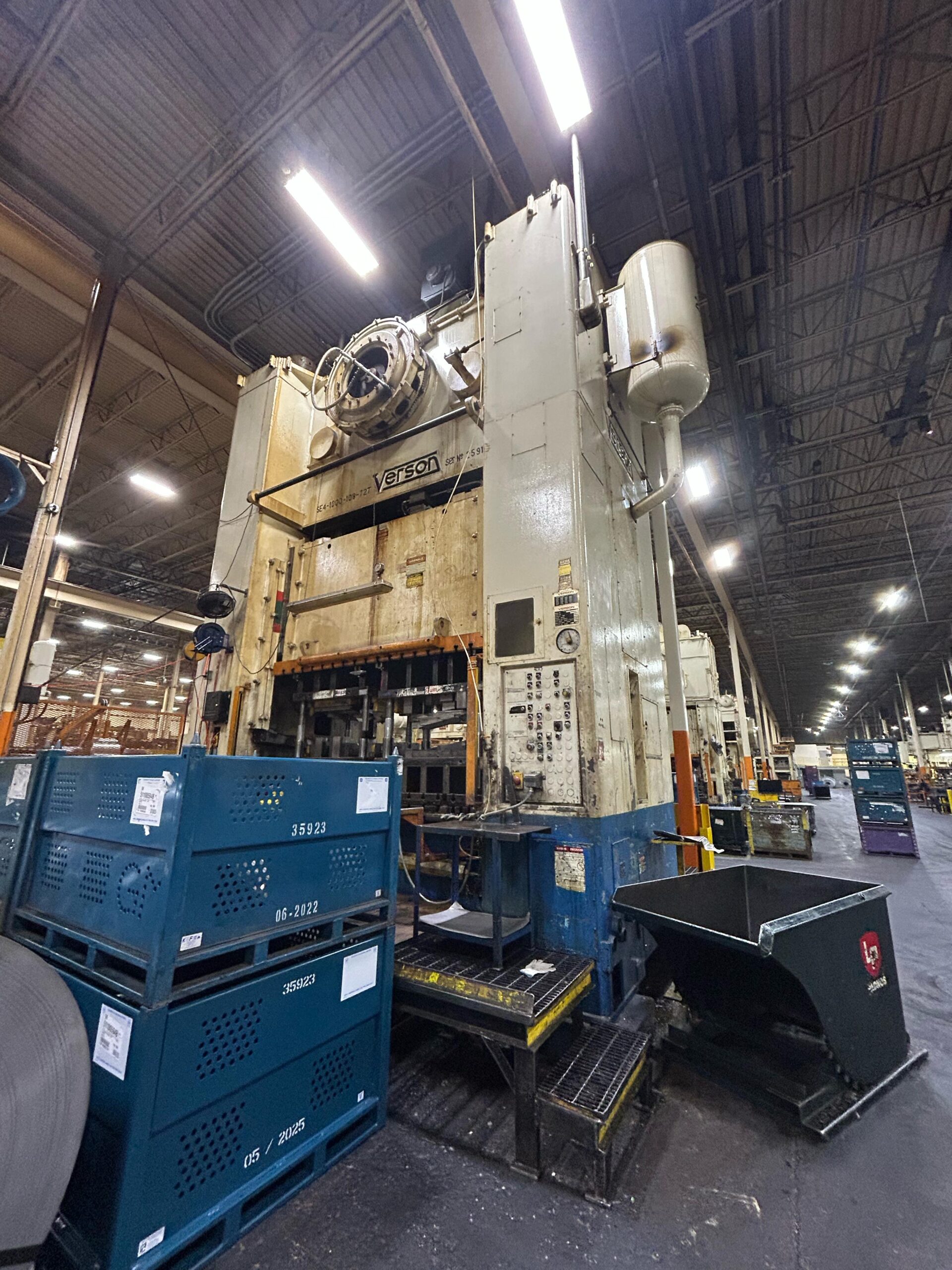
The presses here are giants made by SEYI, Minster and Verson, some capable of delivering 1,000 to 1,250 tons of pressure. The dies alone can weigh 30,000 pounds. “You can’t quite imagine the scale until you stand under one or on top of one,” says Destiny. It’s not a place for carelessness.
Some repairs require crawling into the dark pit beneath a press, where dust, oil and heat settle like layers of sediment. The air smells of metal and burnt grease.
She’s on her stomach, flashlight beam darting between cables, eyes scanning for frayed wires or broken insulation. “I really don’t like it under those presses,” says Destiny.
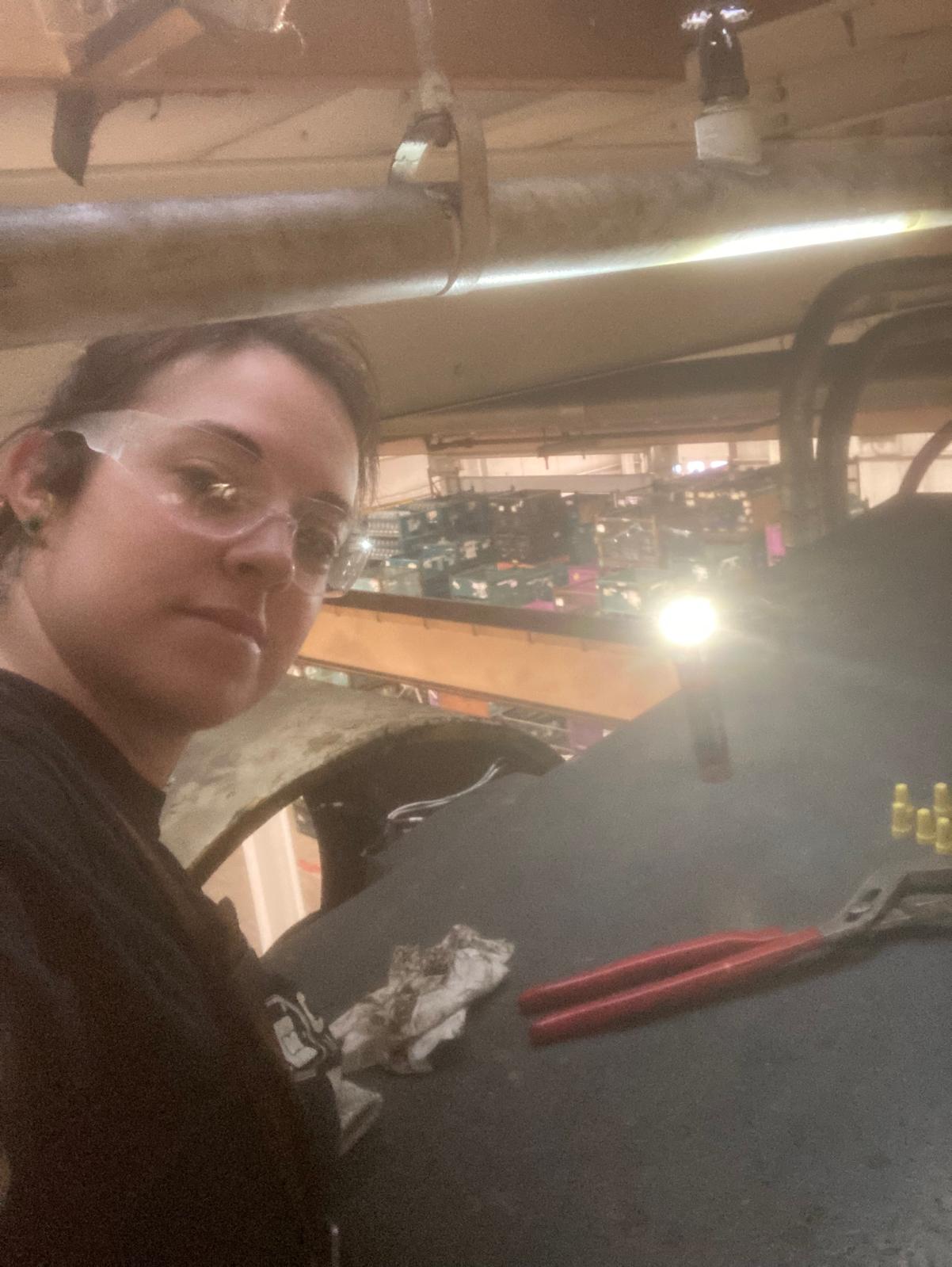
Others demand climbing above the press in a harness and helmet, navigating an electrical wires tangle yards above ground. Toolbag at her hip, she picks her way across a catwalk 10 yards up, looking out over the factory. Below, the plant floor is a patchwork of moving parts and shifting shadows.
High voltage, higher stakes
Destiny works with live systems carrying up to 480 volts. One slip of a tool and the result can be instant. A single mistake can stop the heart, burn flesh to the bone, shut down breathing, scramble nerves and hurl a body into the machinery around it.
“You learn not to hesitate. And you learn not to pretend,” Destiny says. “The machinery doesn’t care who you are.”
From cheerleader to tradeswoman
In high school, Destiny was a cheerleader and played the clarinet in the marching band. She liked the energy, the teamwork, the precision. She also liked building things in projects with her grandfather.
Her grandparents were important influences on her life. “Grandpa taught me how to build things that worked, how to take them apart, understand them, and put them back together,” she says.
Capable and kind
She still remembers building a working car wash model for science class. Her grandparents shaped her idea of what mattered. Her grandfather showed her the satisfaction of making and fixing. Her grandmother and grandfather together showed her the power of working hard and kindness.
“That combination, knowing how to do things and knowing how to treat people, has stayed with me,” Destiny says. “It’s what I want for Addy, too. I want her to be capable and kind. And if I can inspire other people, especially young women in technical jobs, to be both, then I’ve done something worthwhile.”
The turning point
Destiny started her career at Challenge Manufacturing not as an electrician but as a press operator. It was a stable job in a tough economy and a rough environment. Factory work meant long shifts, constant noise and physical strain. But with Addy in the picture, she needed something reliable. Working the press all day paid enough to keep the lights on.
“But I looked around and thought. I don’t want to be feeding the line forever. I want to know how these machines actually work.”
Then, in 2018, Challenge Manufacturing offered employees the chance to apply for an in-house development program. Destiny applied for the Industrial Maintenance Program, a four-year
course at Grand Rapids Community College that could lead to an electrician’s licence.
The application required essays, a panel interview and a four-year commitment to night school alongside a full-time job. “I knew it was going to be hard. But I also knew it was the path into more meaningful work and a stable profession,” she says.
She applied, was accepted, and began the grind: eight- to 10-hour days on the Challenge Manufacturing work floor behind a press, four-hour classes two nights a week. “And homework,” says Destiny. “Lots of homework!”
The tools of the trade
At Grand Rapids Community College, Destiny learned electrical troubleshooting, motor controls, die protection wiring, PLC programming, hydraulics, pneumatics, conduit bending, arc flash safety.
She became fluent in reading blueprints and wiring diagrams, in interpreting manuals for Allen Bradley controls and Powerflex drives.
She failed her first licensing exam. “That was the lowest point,” she says. “People were already saying I couldn’t do it. I didn’t want to prove them right.” She studied harder and passed on her second try in 2022.
A journeywoman in a man’s world
In her current role, Destiny is the only female maintenance specialist at Challenge Manufacturing. Her team includes five mechanics and another electrician, all male. She’s used to being the only woman in the room.
“It’s not just the physical work,” Destiny says. “It’s proving every day that you belong in a field where almost everyone assumes you don’t. You have to prove yourself over and over.”
Over time, through consistent, reliable work, she earned respect. “You find your allies. The people who want the job done well, not just done by someone who looks like them.”
Her mentor is an older mechanic who treats her as an equal. “We walk the floor together, trade tasks, back each other up,” she says. “If I’m checking a control circuit, he’s looking for the mechanical fault. If I’m up top, he’s in the pit. That trust is everything. We watch each other’s backs.”
The path she chose is not a common one. There are about 450,000 journeyman electricians in the United States, but less than 4% are women. That works out to fewer than 20,000 women in the entire country. The training is long and demanding, with four years of combined work and study, capped by a rigorous licensing exam.
Tools, grit and quiet wins
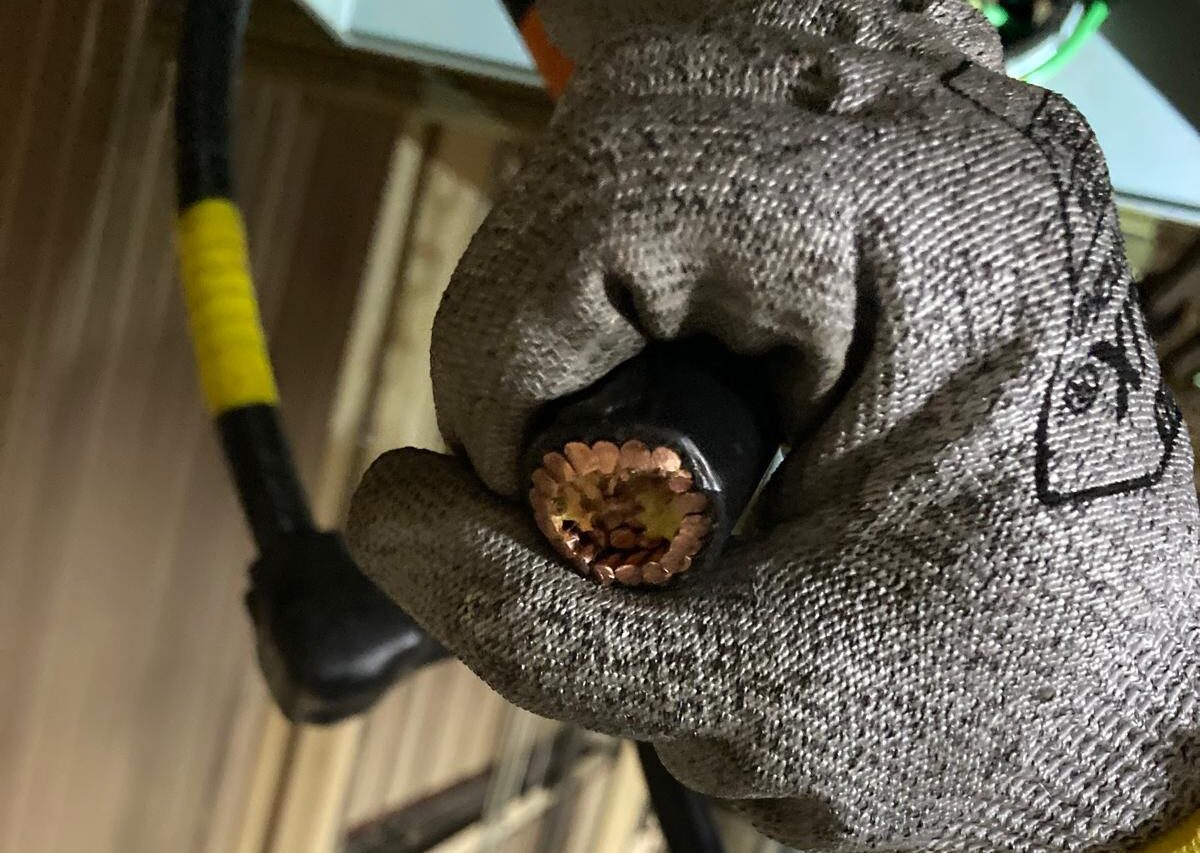
Destiny’s favorite tools are her multimeter, screwdriver and channel locks. “They’re with me all day,” she says. Safety glasses and earplugs are standard. Sometimes she adds cut-proof sleeves or a hard hat, depending on the job.
She likes the problem-solving. “You walk into a breakdown, and it’s a mess of possibilities. And you are under pressure to fix things fast. Production has to keep rolling. You narrow it down, one step at a time. The moment it clicks. That’s the quiet win.”
What other women should know
When asked what advice she’d give to other women considering skilled trades or technical work, Destiny pauses. “You need to be prepared for solitude. Not just being the only woman, but being the one people don’t expect to be there.”
She mentions the subtle doubts, the offhand remarks, the assumption that she’s the one “in training” even when she’s running the job. “You earn respect over time. Sometimes you don’t earn it at all. But what you build, for yourself and your family, is worth the effort.”
She mentors new hires when she can. She talks to women interested in the work. She follows female electricians on social media, not for inspiration, but for solidarity. “It helps to know you’re not alone. Even if you’re the only one in your building.”
She keeps hoping for a female apprentice. She’s told the company she wants to mentor one. “This can’t stay a man’s world. Not when so many women are perfectly capable.”
The real mark of strength
Destiny believes more women should enter trades, not because it’s easy, but because it matters and it can be the path to a fulfilling profession. “The country needs people who can repair and maintain what keeps things moving. Women can do that. We just need the opportunity and the space to learn.”
Her daughter Addy is growing up with a front-row seat to that reality. “She knows I fix things. That I go to work when it’s cold and dark. That I don’t stop just because it’s hard.”
Addy plays soccer, takes karate, and Destiny hopes, learns that showing up for your life is the real mark of strength.
Lessons in resilience
Being a woman in skilled trades means carrying more than just tools. It means navigating doubt, earning authority and setting an example in spaces where few examples exist.
“It’s not about being one of the guys,” Destiny says. “It’s about being yourself and being good enough that the rest fades away.”
Owning your story
Looking back, Destiny says she recognizes a few of the habits that Sally Helgesen describes in her seminal book How Women Rise.
“One I’ve learned from is expecting others to notice your hard work,” she says. “When you’re learning or just doing your best every day, it can feel like no one sees it. I’ve learned to have confidence in myself and be proud of what I’ve done. The recognition comes in time.”
She also recognizes the habit of ruminating over mistakes. “I used to replay things I’d done wrong over and over in my head,” she says. “Now I try to look at mistakes differently. I can’t go back and change them, but I can learn from them, and that motivates me not to make the same mistake again.”
As for her personal brand, Destiny keeps it simple: “When people at work see me, I want them to think I’m knowledgeable and helpful, that I can fix whatever’s broken.” That’s how I show up in meetings and on the floor.”
Beyond the factory
Outside of work, Destiny keeps her balance in motion. She recently bought a Honda 500 motorcycle. On summer weekends, she and Addy ride along Lake Michigan, wind pressing against their jackets, the water glittering beside them.
It’s a whole different world from those January mornings!
“It’s our way to feel free,” she says. “After a week of noise and steel, it’s good to have the open road.”
Written by Howard Lettinga
Managing Partner & Executive Trainer Noblahblah
Klaar om de presentatie van je leven te geven? Plan nu een gesprek.
ContactContact
Are you interested in Destiny Duell? Please contact us.