

Persuasion Tip: The Optimism Bias
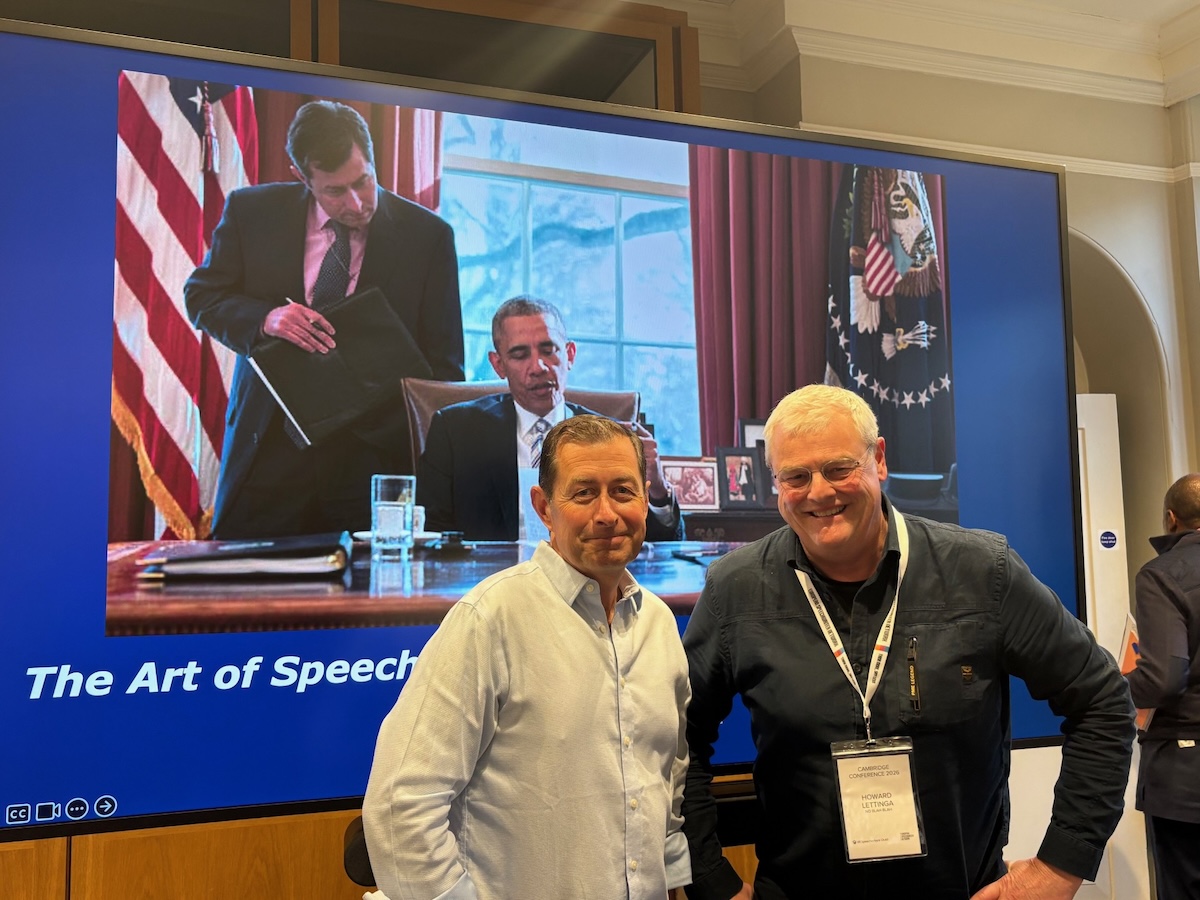
Earlier this year, our Noblahblah co-founder Howard Lettinga attended the European Speechwriters Network Conference in Cambridge. One highlight was a full-day workshop with Terry Szuplat, one of Barack Obama’s longest-serving speechwriters and author of Say It Well: Find Your Voice, Speak Your Mind, Inspire Any Audience.
The man who wrote hope for a living
From 2009 to 2017, Szuplat served as deputy director of the White House Speechwriting Office, helping craft hundreds of speeches for a president who made hope his signature.
Hope was not a finishing touch in Obama’s rhetoric. It was the foundation. His 2004 Convention keynote was titled The Audacity of Hope. It became a book. It became a campaign. Every speech, however difficult the subject, ended with a reason to believe.
One of Terry’s core lessons from the workshop: always end with hope and a call to action. Not style. Strategy.
The science: your brain leans toward the bright side
Neuroscientist Tali Sharot of University College London and MIT found that around 80% of people systematically overestimate positive future events and underestimate negative ones. Her research, published in Current Biology (2011), confirms this is not wishful thinking. It’s wiring and it’s known as Optimism Bias.
When people receive positive information about the future, the brain updates readily. Negative information meets resistance. The brain is built to lean forward.
In other words: your audience isn’t just optimistic. They’re hopeholics.
What this means for persuasion
Ending your presentation on hope is not naive. It is working with your audience’s brain, not against it.
How to use it
✖ “We face serious challenges ahead.”
✔ “We have everything we need. Here is the first step.”
✖ “If we do nothing, things will get worse.”
✔ “One decision today can change everything. And that decision is yours.”
The pattern
- Acknowledge the reality
- Point to a better future
- Give one clear action
That last step converts hope into momentum. Imagining a positive future activates the brain’s reward system. Hope does not just feel good. It gets people moving.
Summary
The optimism bias is already in your audience. You do not have to create it. Speak to it. Acknowledge what is hard. Point to what is possible. Close with hope and a clear next step.
That is not spin. That is persuasion working with human nature.